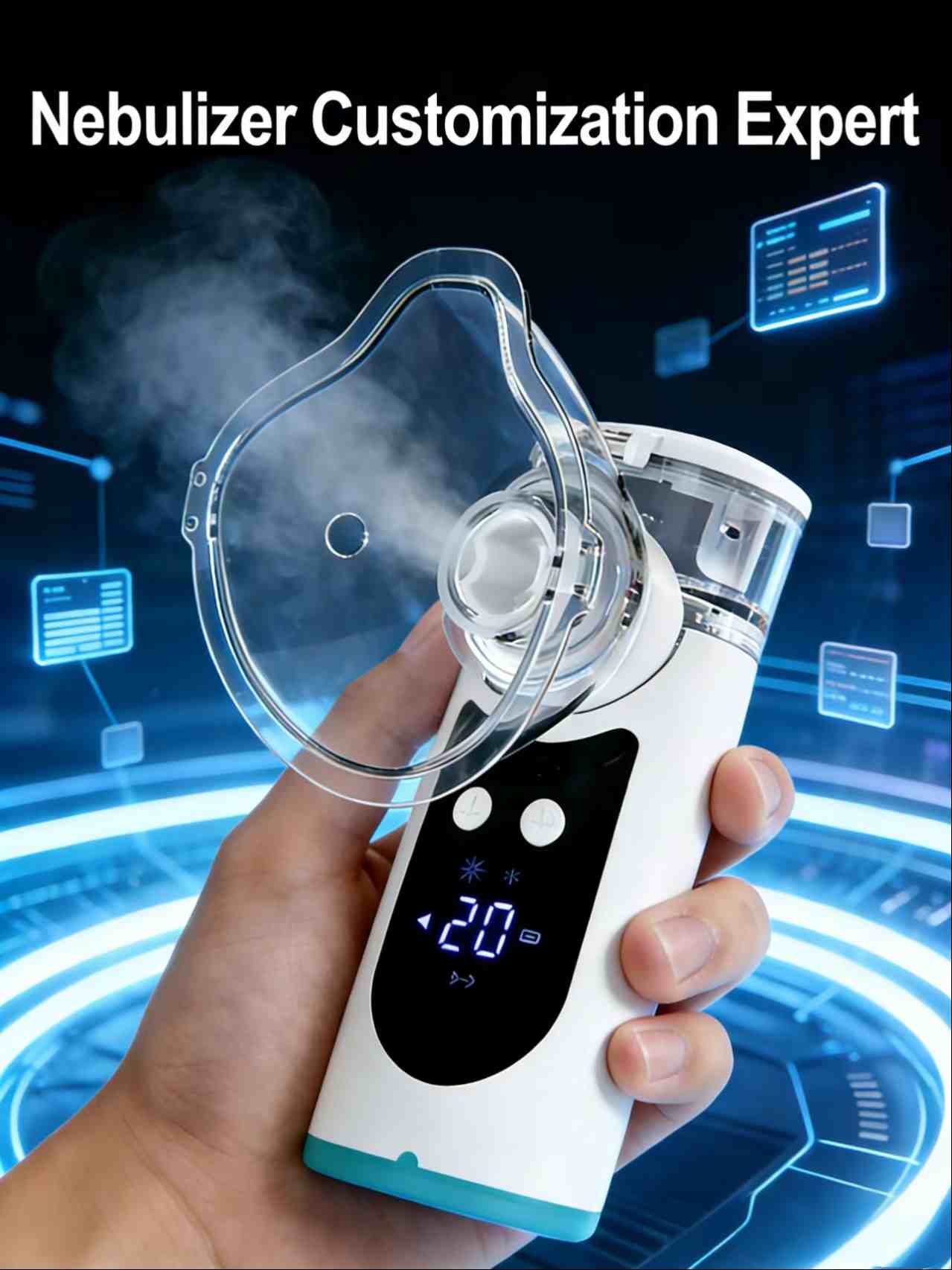

How to Choose a Reliable OEM Mesh Nebulizer Manufacturer for Europe, the Middle East, and South America

The global demand for respiratory care devices has continued to grow in recent years. Rising cases of asthma, COPD, and seasonal respiratory conditions, combined with the expansion of home healthcare, have created increasing opportunities for private label nebulizer brands worldwide.
For distributors and brand owners in Europe, the Middle East, and South America, launching a mesh nebulizer under a private label can be a promising opportunity. However, selecting the right OEM manufacturer is not simply a purchasing decision — it is a strategic decision that directly affects regulatory compliance, brand reputation, and long-term market stability.
Below are several key factors that importers and distributors should carefully evaluate when choosing an OEM mesh nebulizer supplier.
1. Regulatory Compliance and Documentation Support
In today’s medical device market, regulatory compliance is no longer optional — it is fundamental.
For European distributors in particular, the implementation of the Medical Device Regulation (MDR) has significantly increased documentation requirements. Manufacturers must be able to provide complete technical files, risk management documentation, traceability systems, and proper labeling support.
Key points to evaluate include:
Valid CE certification
ISO 13485 quality management system
Technical documentation availability
EU Authorized Representative support
MDR awareness and label compliance
Non-compliant documentation can lead to customs detention, delayed market entry, or even product recalls. For brand owners, such risks may result in financial losses and long-term damage to market credibility.
For Middle Eastern and South American markets, regulatory frameworks vary by country, but authorities increasingly require internationally recognized certifications such as CE and ISO 13485. Working with a manufacturer that understands export documentation and regulatory expectations can significantly reduce registration challenges.
A reliable OEM partner should not only hold certifications but also understand how those certifications protect your brand.
2. Product Stability and Batch Consistency
In respiratory therapy devices, product stability directly affects patient experience and brand trust.
Mesh nebulizers, while compact and efficient, require precise control of mesh quality, particle size distribution, and electronic stability. Poor manufacturing consistency may lead to uneven atomization, clogging issues, or reduced lifespan — all of which increase after-sales service costs for distributors.
Important manufacturing considerations include:
Particle size control (commonly 2–5 μm for effective inhalation)
Mesh durability testing
Aging tests for electronic components
Battery performance consistency
Strict quality control during mass production
For distributors in the Middle East and South America, where logistics distances may be longer and after-sales service networks more limited, product reliability becomes even more critical. A stable product reduces complaint rates and strengthens distributor confidence.
OEM manufacturers should be able to demonstrate structured quality control processes rather than relying solely on final inspection.
3. Private Label Flexibility and Customization Capability
Private labeling is more than printing a logo on the device. It requires coordination between design, regulatory labeling, packaging, and user documentation.
When evaluating an OEM mesh nebulizer manufacturer, consider whether they can support:
Logo printing on device and packaging
Custom color options
Multilingual user manuals
Local regulatory labeling adaptation
Retail packaging customization
For European markets, correct symbol usage and labeling accuracy are especially important. For Middle Eastern and South American markets, language localization (such as Spanish or Arabic manuals) may significantly improve retail acceptance.
A flexible manufacturer understands that distributors need brand differentiation, not just standardized products.
4. Supply Stability and Long-Term Cooperation
Medical device distribution requires consistency. Supply interruptions can damage relationships with pharmacies, hospitals, and retail chains.
Before entering into cooperation, distributors should assess:
Production capacity
Lead time reliability
Availability of spare parts (such as replacement mesh cups)
Long-term production planning
In emerging markets especially, losing shelf space due to stock shortages can result in permanent channel loss. Therefore, supply chain reliability should be evaluated as carefully as product specifications.
An experienced OEM manufacturer should approach cooperation as a long-term partnership rather than short-term transactional sales.
5. Beyond Price: Strategic Partnership
Price sensitivity exists in every market, particularly in South America and parts of the Middle East. However, the lowest price does not always represent the lowest risk.
Choosing an OEM mesh nebulizer manufacturer should involve balancing:
Regulatory security
Product reliability
Customization flexibility
Supply stability
Transparent communication
In the competitive respiratory device industry, brand reputation can take years to build and only months to damage. A responsible manufacturing partner helps safeguard that reputation.
Conclusion
As the global demand for home respiratory care continues to expand, private label mesh nebulizers present significant opportunities for distributors in Europe, the Middle East, and South America.
However, success in these markets depends not only on product features, but on regulatory readiness, manufacturing discipline, and supply chain reliability.
Selecting a qualified and experienced OEM mesh nebulizer manufacturer is ultimately a strategic investment in your brand’s long-term growth.
Common Problems with OEM Mesh Nebulizers in Overseas Markets — And How to Avoid Them
Related Article